A Dialogue and Resonance of World Heritage
A natural heritage collaboration between Skyrail Rainforest Cableway and Wulong Karst
World Heritage Conservation: A Natural Connection Across Mountains and Oceans
World Natural Heritage is not a static landscape.
It is a form of natural memory left by the Earth over immense time, and a precious asset that people must understand, respect and protect together. Behind every rainforest, every gorge, every tiankeng and every cave, there is more than a spectacular view. There are records of life’s evolution, the formation of landforms, and the continuing operation of natural systems.
For this reason, the meaning of World Natural Heritage lies not only in being seen, but in being understood.
When the tropical rainforest of Cairns, Australia meets the karst landscape of Wulong, Chongqing, China, a natural heritage dialogue begins across mountains and oceans. One is known for ancient rainforest and ecological diversity; the other for tiankengs, natural bridges and underground river systems. One reveals how life flourishes. The other reveals how rock is shaped by water and time.
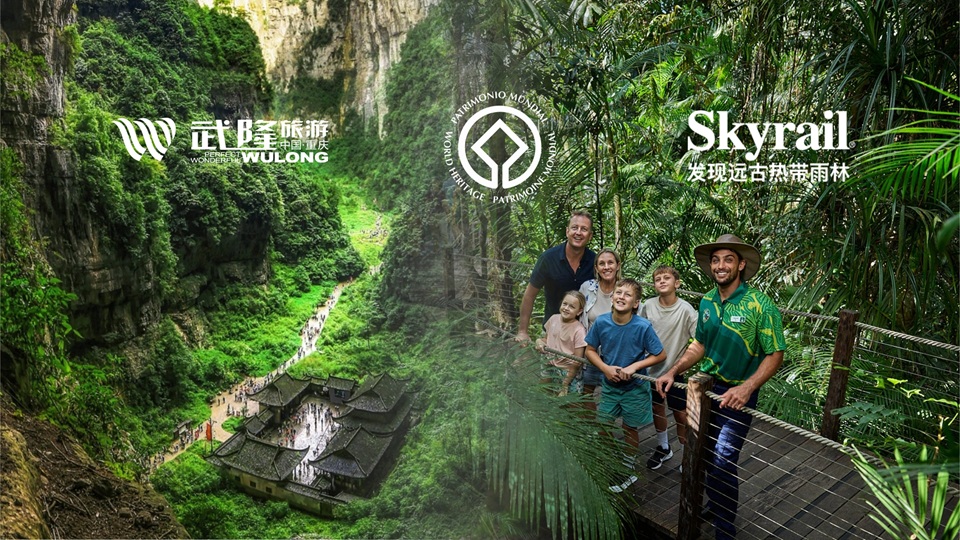
The connection between Skyrail Rainforest Cableway and Wulong has grown from this shared understanding. It is not simply a destination showcase, but a cross-regional resonance of natural heritage, ecological value and public education.
Two Landscapes, One Shared Natural Value
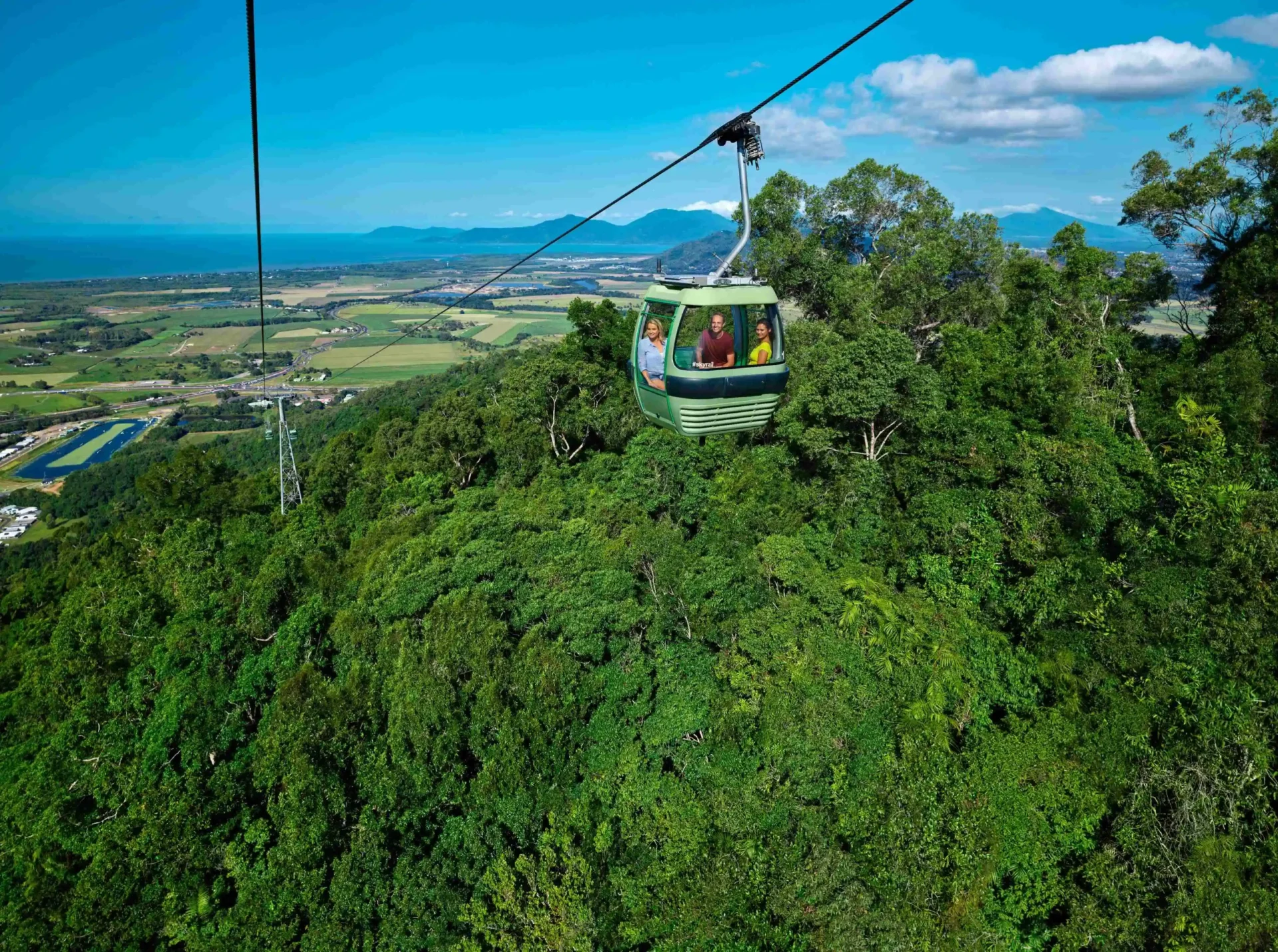
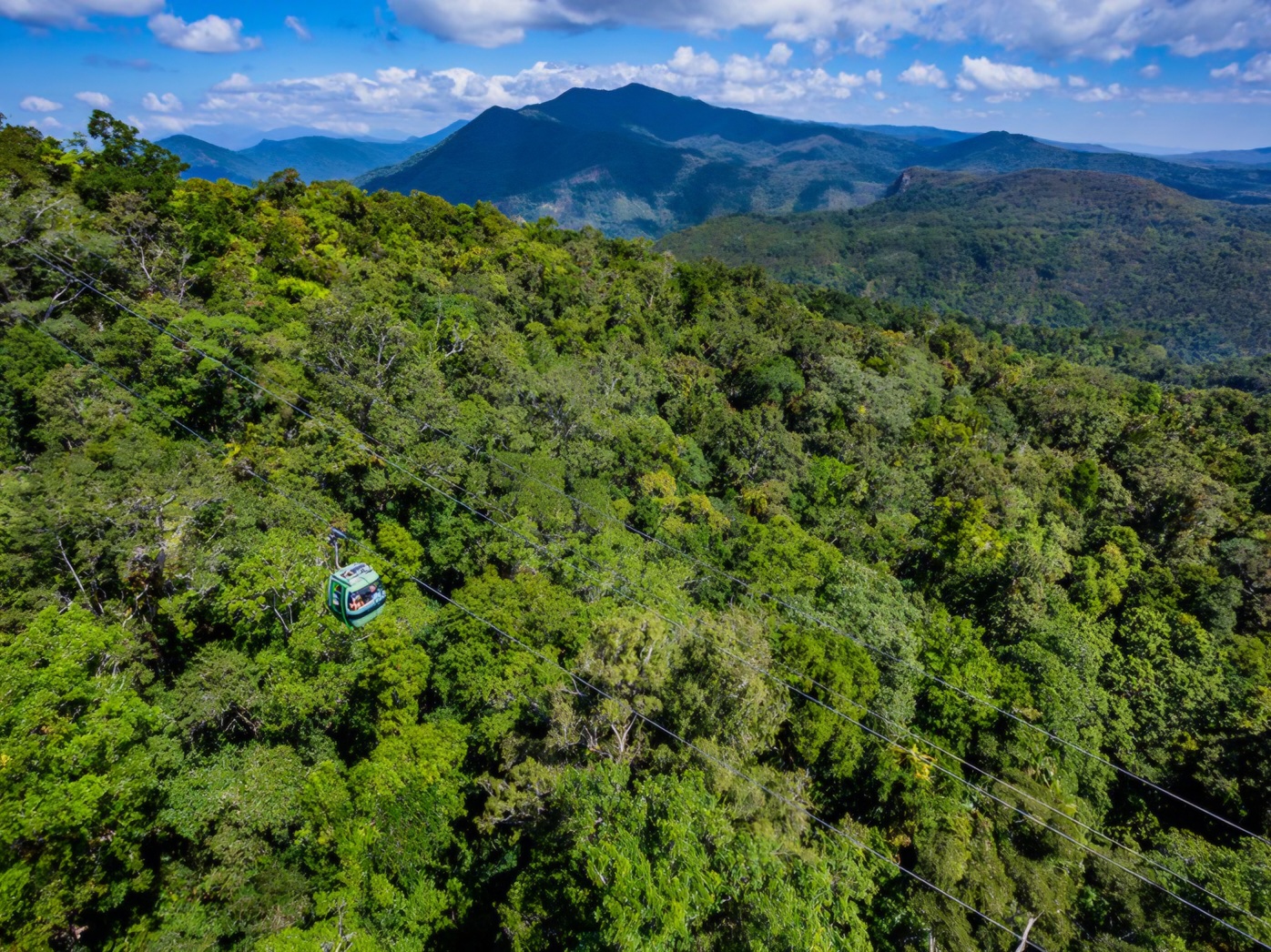
Skyrail Rainforest Cableway is connected to the Wet Tropics Rainforest of Cairns, Australia.
This is not simply a green forest. It is a living natural archive. The Wet Tropics Rainforest preserves traces of ancient life that continue to the present day, with rich biodiversity and a unique ecosystem. Giant ferns, vines, canopy layers, streams, waterfalls, and the plants and animals that live among them together form a living world that continues to function.
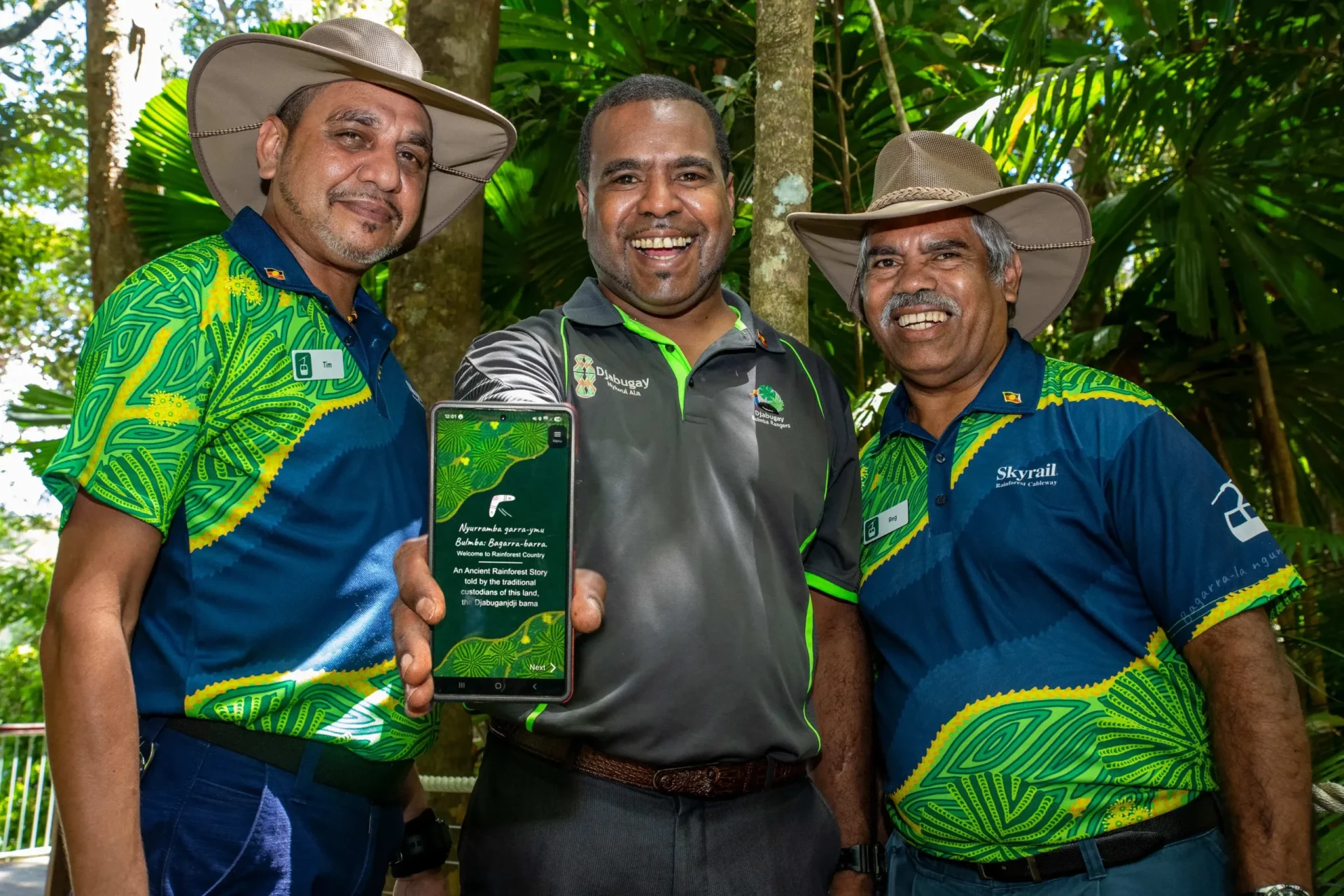
When visitors travel above the rainforest on Skyrail, they are seeing more than a canopy of trees and flowing waterfalls. They are approaching this World Heritage landscape in a lighter and more thoughtful way. Through the cableway experience, rainforest boardwalks, Ranger Guided Tours, multilingual app content and ecological interpretation, Skyrail hopes visitors will not only enjoy the scenery, but also understand why the rainforest is precious.
Wulong, by contrast, reveals another language of nature.
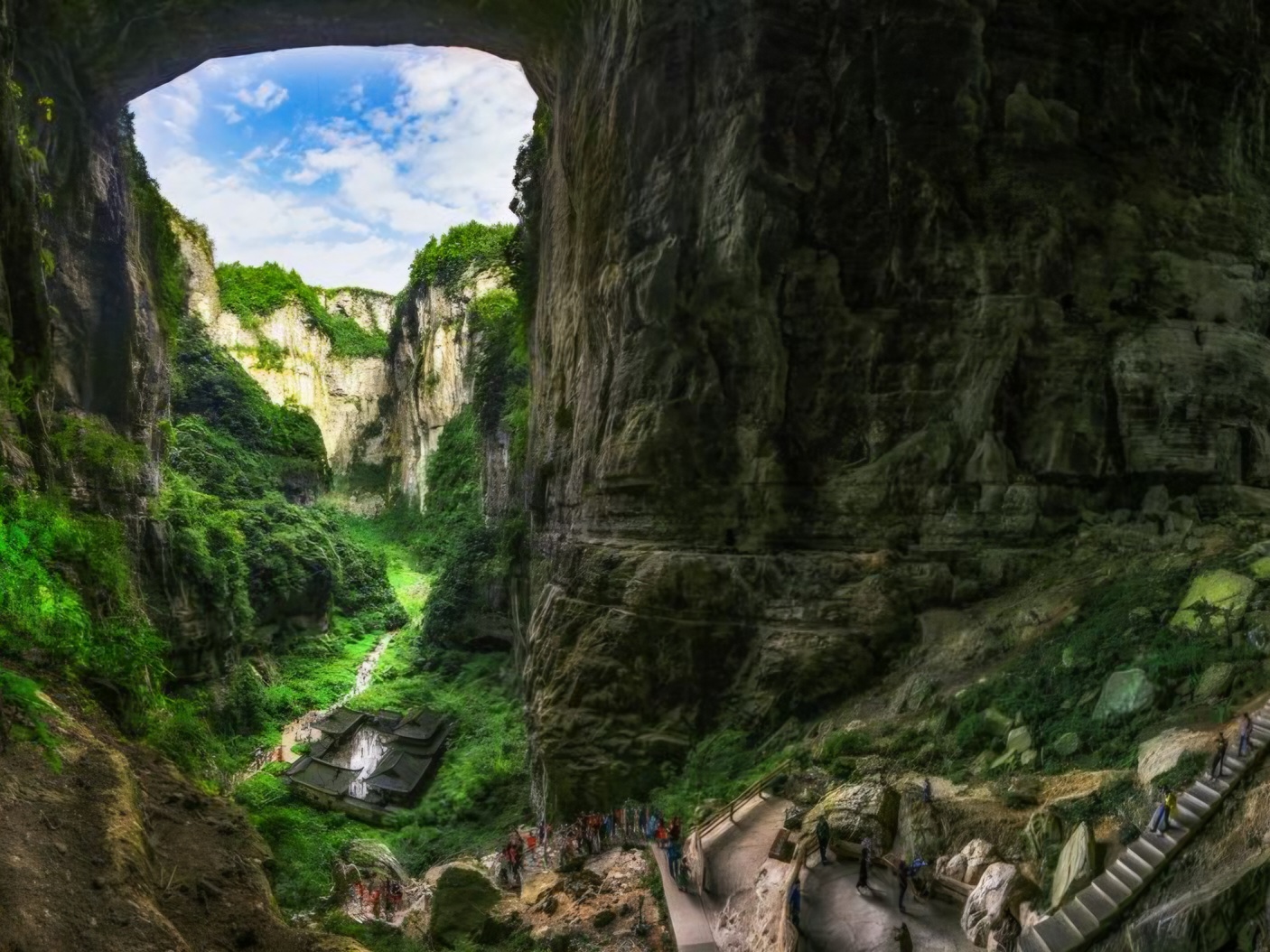
Located in Chongqing, China, Wulong is a classic karst landscape. The Three Natural Bridges, tiankeng clusters, underground river systems and Furong Cave together form a magnificent and deeply layered geological world. Its power comes not only from the grandeur of mountains and gorges, but also from the natural evidence left by the combined work of water, rock and time.
In Wulong, visitors walk between gorges and stone bridges, look up at cliff faces and tiankengs, and enter the depths of caves. What they encounter is part of the Earth’s geological evolution. Wulong’s natural value lies not only in its “wonder” and “beauty”, but in the way it fully demonstrates the formation, transformation and continuing evolution of karst landscapes.
One is rainforest. The other is karst. One is lush, humid and full of life. The other is deep, powerful and inscribed with geological time. Their forms are different, yet they point to the same essential truth: natural heritage deserves to be understood, and it deserves to be carefully protected.
Water: The Most Natural Language Connecting the Two Places
If there is one natural connection between Skyrail’s rainforest and Wulong’s karst landscape, it is water.
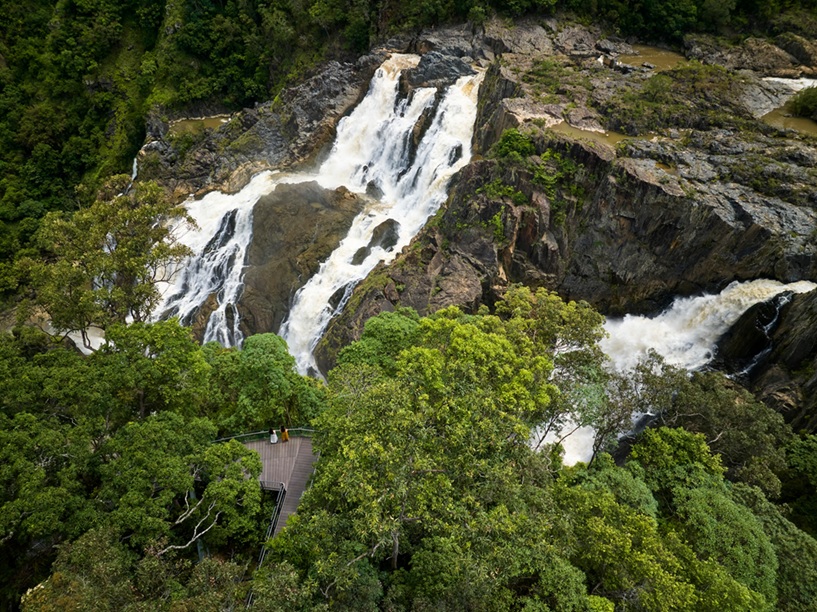
In Cairns, water appears as rain, mist, streams, waterfalls and humid air. It falls into the forest, is caught by the canopy, absorbed by the soil and used by the roots. It moves through valleys to form creeks and waterfalls, and returns to the air through transpiration, becoming part of the mist and cloud once again.
Water keeps the rainforest growing, and it also shapes the character of the rainforest. Because of water, the forest has a dense canopy. Because of water, ferns, mosses and vines thrive in the humid air. Because of water, waterfalls drop through the valleys and become one of the most vivid sounds of the rainforest landscape. At Skyrail, water helps the forest grow upward.
In Wulong, water enters deep into the rock.
It slowly moves along cracks in the limestone, enters underground river systems, gradually dissolves the rock layers, and slowly enlarges underground spaces. Over immense time, caves take shape; parts of cave roofs collapse to form tiankengs, while the remaining rock bodies are left behind as natural bridges.
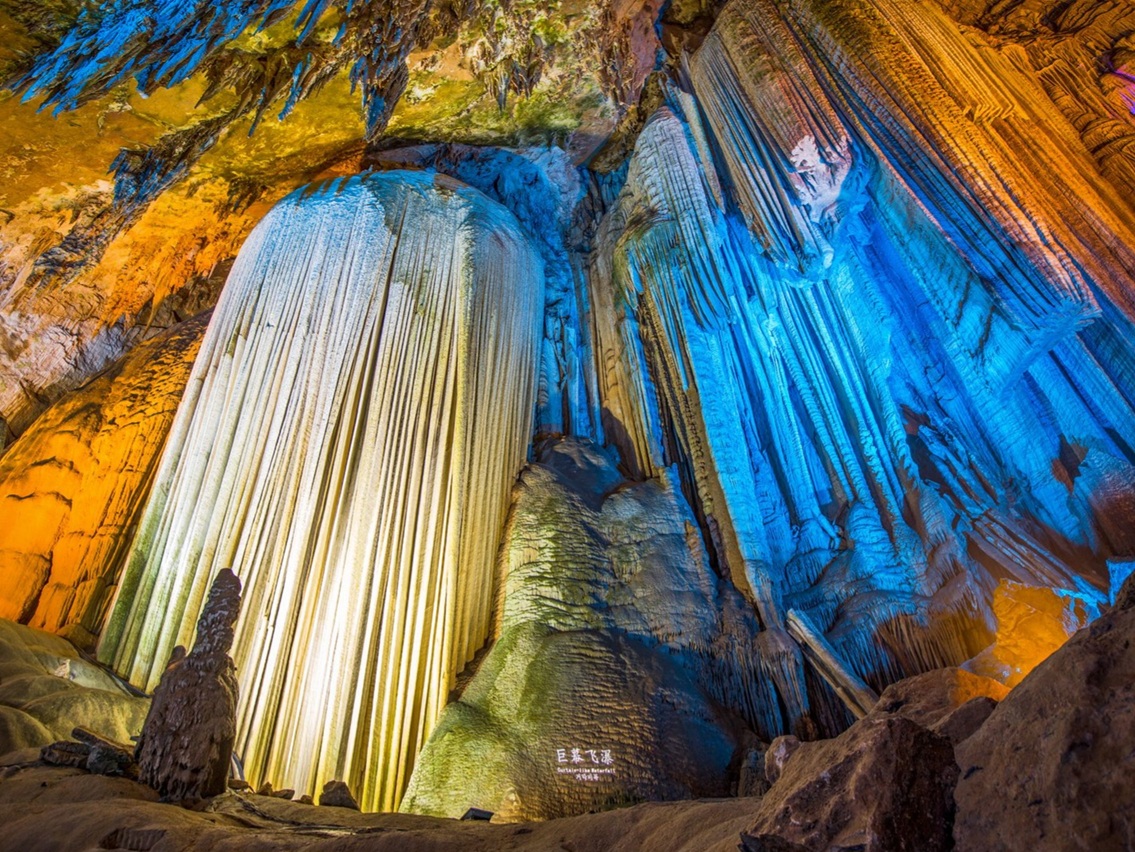
Water not only “takes away” the rock. It also allows rock to “reappear” in another form. In Furong Cave, droplets rich in calcium carbonate enter the cave and, as the environment changes, redeposit minerals over time, slowly forming stalactites, stalagmites, columns and cave flowers. Stone may appear hard and unchanging, yet it too can grow slowly through water and time.
In Wulong, water makes rock bloom.
The same water writes different natural stories in different lands. At Skyrail, water moves upward into trees, leaves, air and mist, allowing the forest to continue growing. In Wulong, water moves downward into cracks, caves, underground rivers and rock layers, slowly changing the shape of stone.
One shows how life flourishes. The other shows how landforms take shape. One is the breath of the rainforest. The other is the memory of rock. This is why water is the most natural language connecting the two places.
Three Years of Interaction: From Display to Co-creation
The connection between Skyrail Rainforest Cableway and Wulong began with an online exchange for young people.
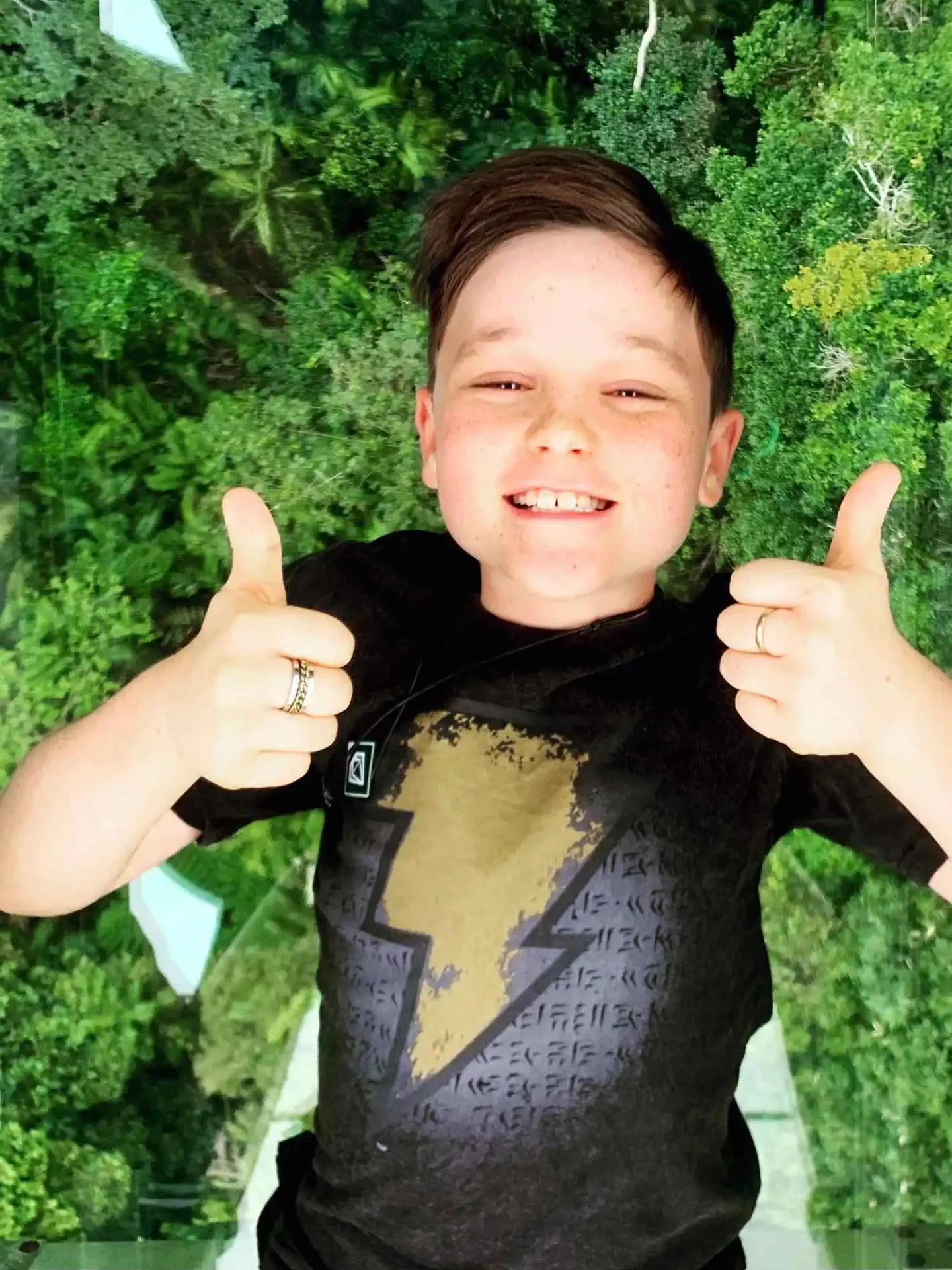
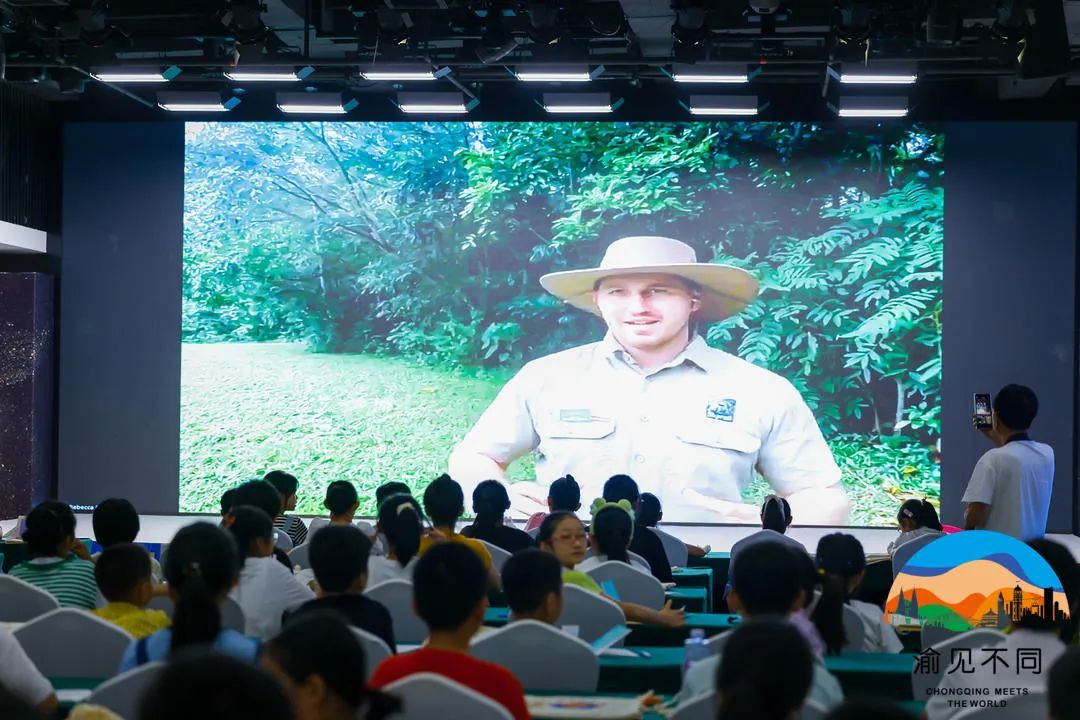
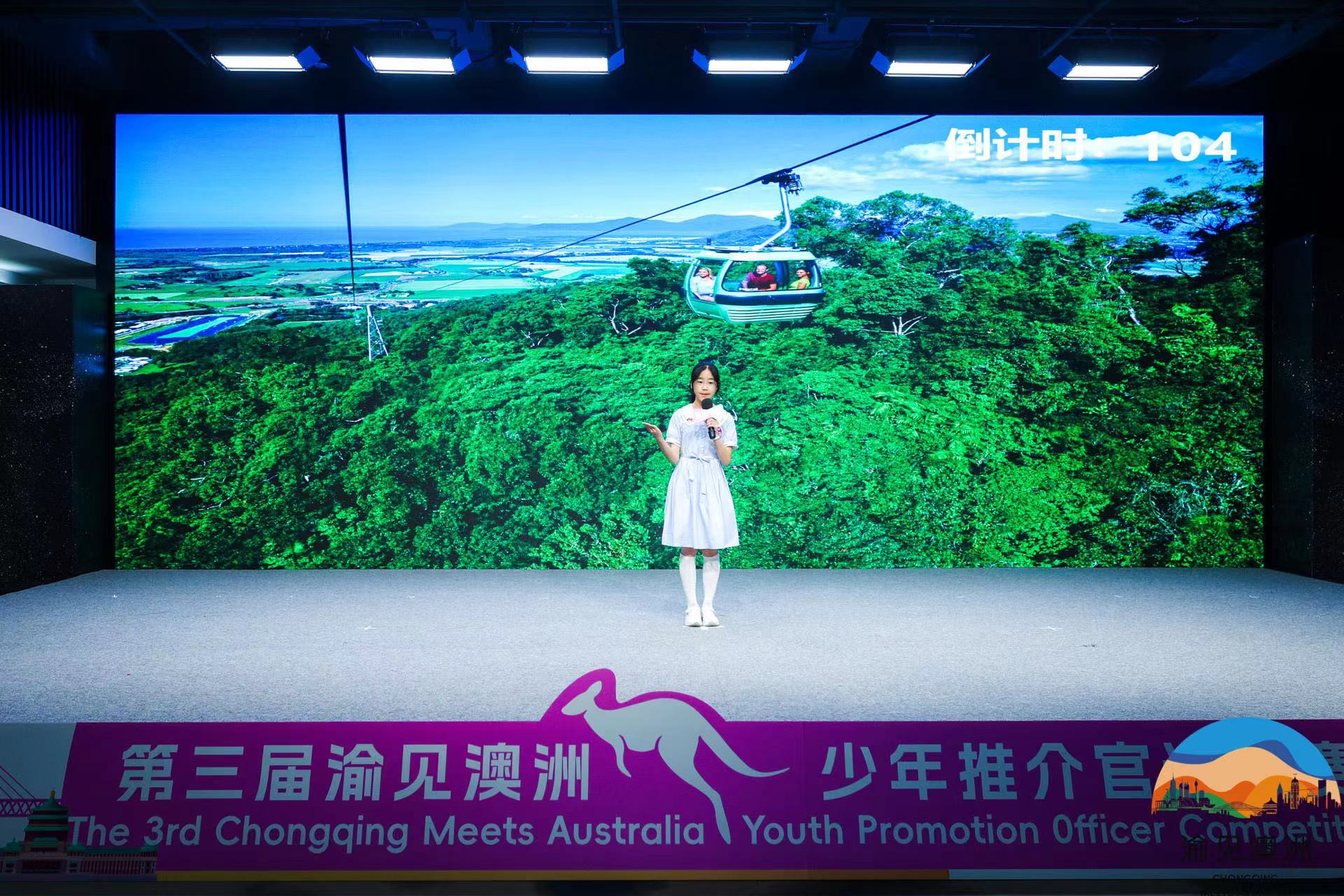
During the “Chongqing Meets Australia” Youth Ambassador activity, Skyrail connected remotely with children in Chongqing, bringing Australia’s ancient tropical rainforest to them online. Skyrail Ranger Luke Stahl joined the “young ambassadors” in a lively virtual exchange, sharing why the Wet Tropics Rainforest is recognised as World Heritage, while also introducing its unique species, ecosystem and the work of Skyrail’s Rangers.
The meaning of this exchange went beyond allowing children in Chongqing to “virtually tour” an Australian tropical rainforest. More importantly, it helped a younger generation from different regions build a new understanding through World Natural Heritage: natural landscapes do not exist in isolation, and behind them are values worth learning, respecting and protecting.
From this first online exchange, the cooperation between Skyrail and Wulong gradually expanded.
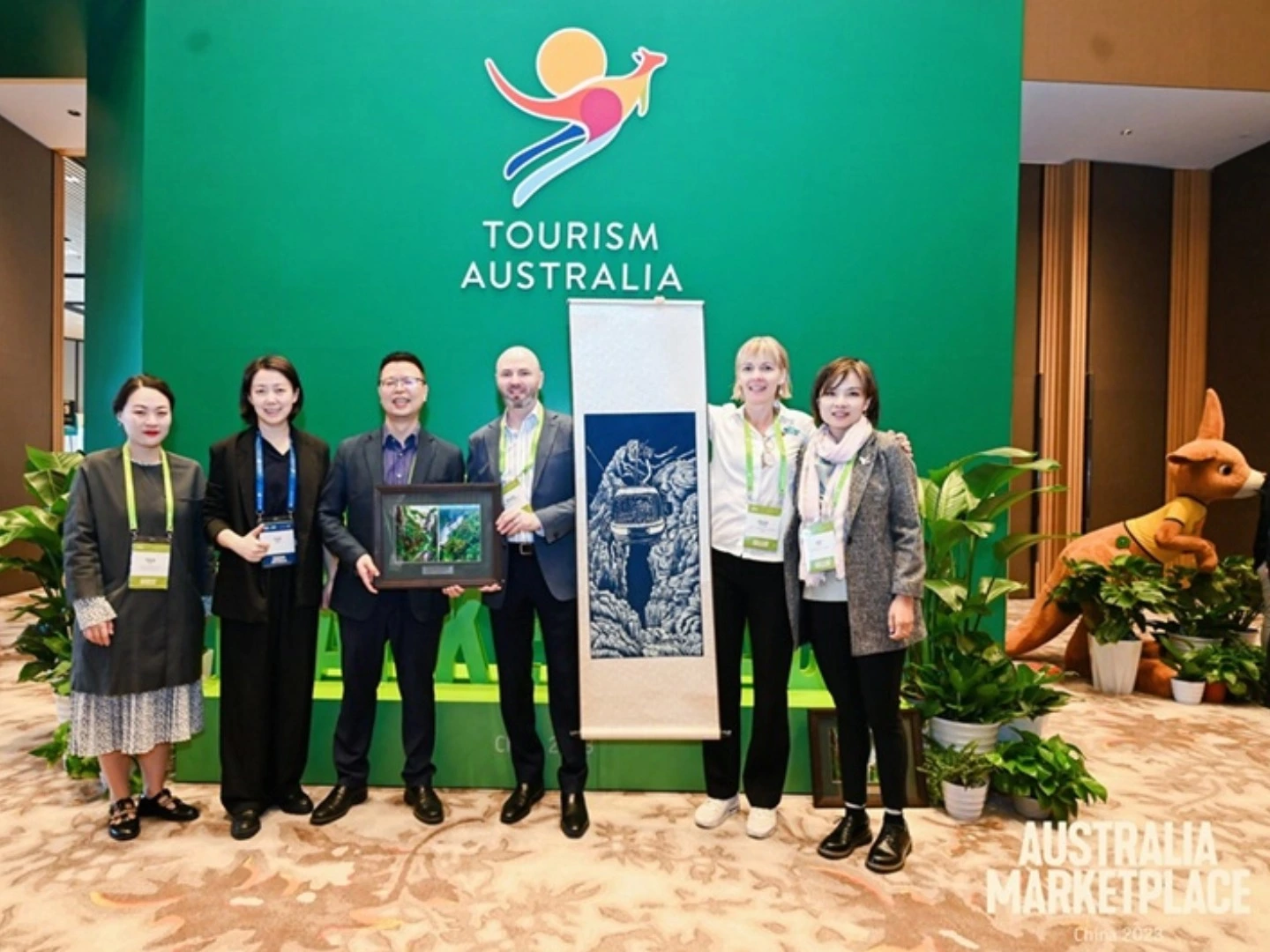
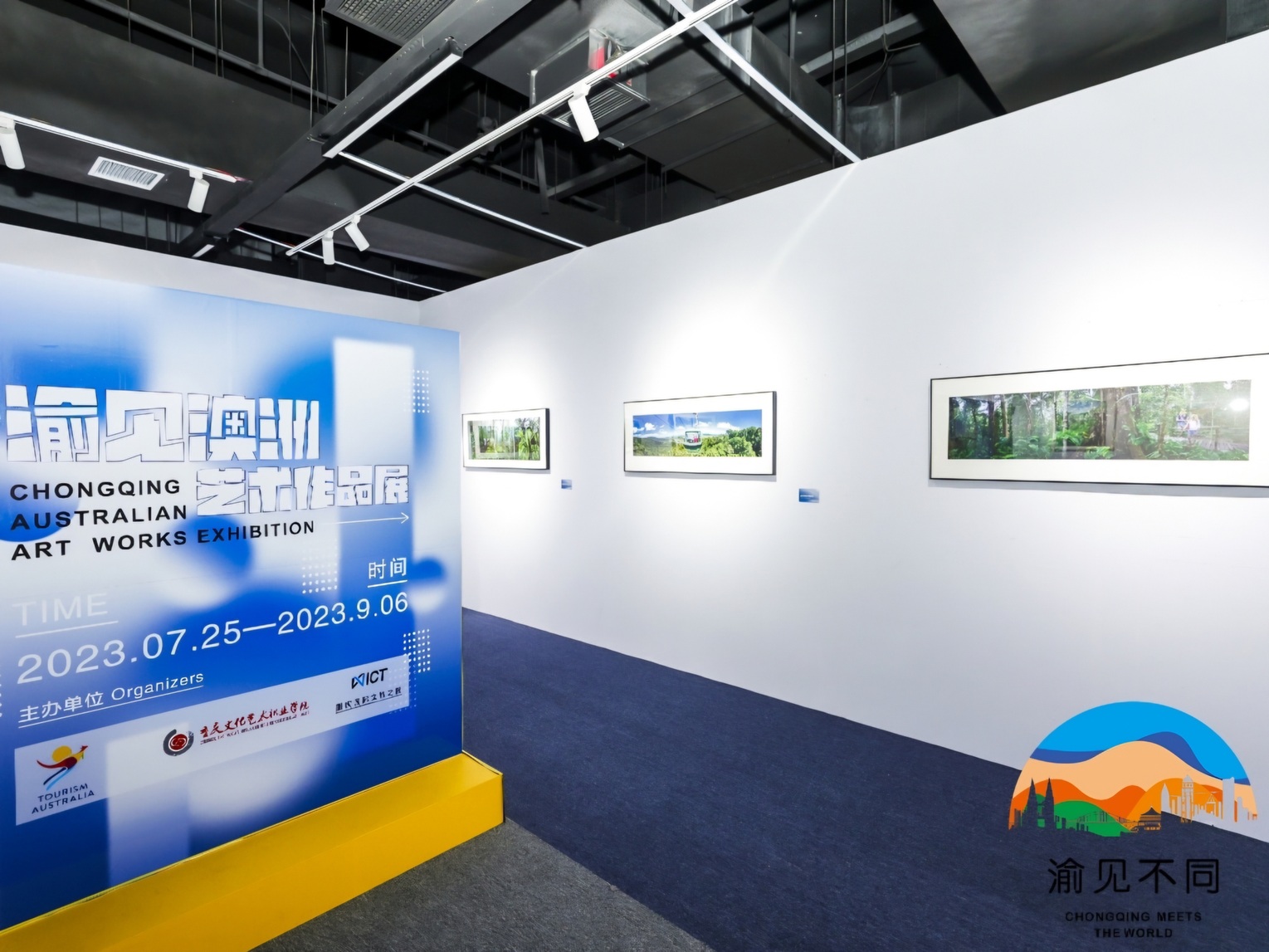
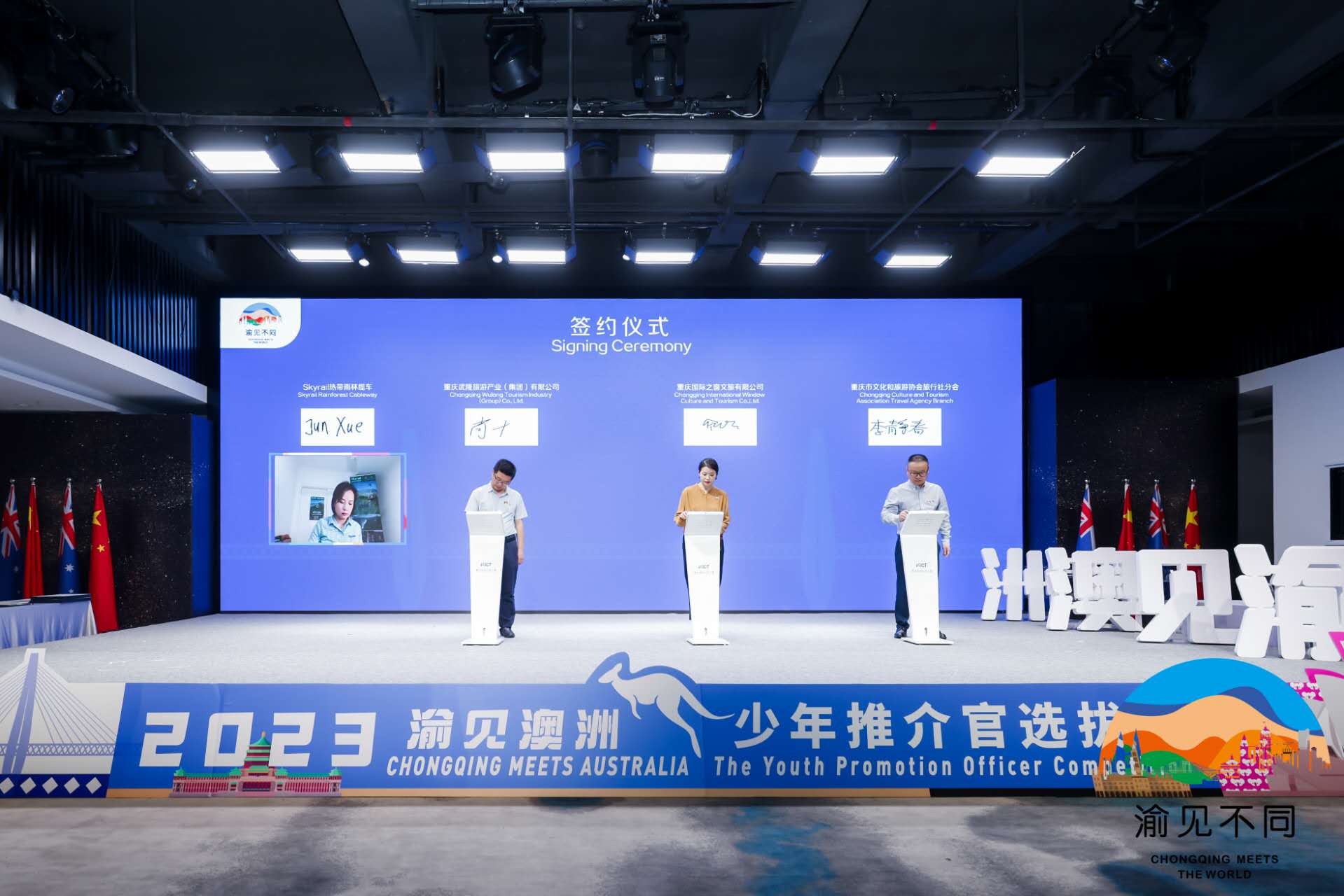
From Chongqing to Guangzhou, from event sites to content communication, from destination display to visitor interaction, the two destinations have continued to appear before each other’s audiences in different forms. In Chongqing in 2023, Chongqing in 2024 and Guangzhou in 2025, three years of ongoing interaction have helped the relationship move beyond a single event and develop into a clearer shared narrative.
At the heart of this narrative is the idea: “Together for Nature”.
In subsequent collaborations, both sides have explored more ways to express World Heritage, ecological protection and sustainable tourism. Through destination displays, interactive photo points, co-branded themed content and commemorative items, Wulong and Skyrail have helped visitors engage with the idea of natural heritage protection in accessible and enjoyable ways.
Three years of cooperation have also moved both parties from “presenting each other” to “telling a shared story together”. Skyrail is not only introducing Australian rainforest to Chinese visitors, and Wulong is not only presenting China’s karst wonders to overseas audiences. Together, the two destinations are beginning to express a broader message: natural heritage in different parts of the world may take different forms, but it all deserves to be understood and protected.
The value of this collaboration lies not only in cross-border destination promotion, but also in the way continuous interaction helps more people realise that natural heritage sites can be connected, and that ecotourism can also become a form of nature education.
Natural Heritage Brings Us Together and Gives Us a Shared Responsibility to Communicate
Natural heritage has given Skyrail and Wulong the opportunity to come closer together.
It connects two places separated by vast distance through shared natural value, and it allows two very different landscapes to resonate through the same commitment to protection. But the meaning of this collaboration is not simply to place two destinations side by side. It is to help more people see nature in a new way.
When visitors see Skyrail, they see more than a cableway moving through the rainforest. They see how an ancient ecosystem is nourished by water and preserved through time.
When visitors learn about Wulong, they see more than tiankengs, natural bridges and caves. They see how water and rock have worked together over immense time to shape the Earth.
This is the true meaning of natural heritage communication: scenery should become more than scenery, and travel can become a way of understanding nature.
Skyrail’s annual Chinese-language guided tours during Chinese New Year are an extension of this idea. During the festive season, visitors do more than board the cableway and see clouds and forest meet. They can also pause and listen to stories about rainforest ecology, World Natural Heritage and the connection between two World Heritage landscapes. When knowledge travels alongside beauty, the journey gains depth and emotion.
For Wulong and Skyrail, collaboration is not simply a brand partnership. It is a shared responsibility. Both sides hope to help visitors understand the preciousness of natural heritage, recognise the importance of ecological protection, and approach nature in a more gentle and respectful way through experiences that are vivid, accessible and engaging.
A truly meaningful collaboration does not merely allow two destinations to see each other. It allows more people, through them, to see the value of nature itself.
From Three Years to a Longer Future
Three years is a witness to a partnership.
But for rainforest and karst, three years is only a moment in the long river of nature.
Rainforests need time to grow. Rocks need time to be shaped. The protection of natural heritage also requires the continued understanding and action of one generation after another.
From Cairns to Chongqing, from tropical rainforest to karst wonders, the natural heritage dialogue between Skyrail and Wulong will continue. In the future, both sides will continue to uphold the shared belief of “Together for Nature”, allowing rainforest and karst to resonate together, and helping more people see nature, understand nature, and take part in protecting nature.
From rainforest to karst, this World Heritage resonance across mountains and oceans continues to grow.